Skylands is the official botanical garden of the State of New Jersey, and it is twenty minutes from the door. Ninety-six acres of formal planting laid out around a Tudor Revival manor, sitting inside a thousand acres of woodland in Ringwood State Park.
It is a complete change of register from everything else we would send you to. The rest of this area is deliberately wild; this is the one place near the lake where somebody spent decades arranging things on purpose.
What it costs, which is mostly nothing
Walking the gardens is free, all year. The only charge is a state parking fee, and only on summer weekends and holidays between Memorial Day and Labor Day — a few dollars for a New Jersey vehicle and a little more for an out-of-state one, cash only, so carry some. Every other day of the year you park and walk in.
The gardens are open daily from eight in the morning until eight in the evening through the summer clocks, and until six once they go back. That evening hour in June is the best of the day and almost nobody uses it.
Whose garden this was
Skylands is somebody’s life’s work, which is why it does not feel like a public park with flowers in it. The manor is a 1920s Tudor Revival house, and the man who commissioned it, Clarence McKenzie Lewis, was a stockbroker and a serious plantsman who spent about thirty years collecting for the grounds — sending for specimens from around the world and moving whole mature trees into place.
New Jersey bought the estate in the 1960s and named the ninety-six acres closest to the house its official botanical garden in 1984. The thousand acres around it stayed park. That history is the reason the planting gets progressively wilder as you walk away from the manor: you are walking out of one man’s garden and into the state’s woods, and the join is deliberately soft.
When to go, if you get to choose
The peak here is unusually well defined: the second week of May, give or take. Two things happen at once.
The Crab Apple Vista is the signature — a sixteen-hundred-foot allée of crab apples running away from the manor and ending at four sculptures. In bloom it is a quarter of a mile of pink, and it is the photograph everyone comes back with. It opens around Mother’s Day.
The lilac collection peaks in the same two weeks: over two hundred varieties of French hybrids and species, underplanted with grape hyacinths. Go in the warm part of the afternoon, when the scent carries.
The Azalea Garden runs slightly later, azaleas and rhododendrons framing a reflecting pool that fills with lotus and water lilies through the summer. The Perennial Border and the Annual Garden are at their best much later, into July and August, which is the argument for a second visit rather than a longer first one.
- Crab Apple Vista A quarter-mile of pink. The photograph everybody comes back with.
- The Lilac Garden Two hundred varieties. Go in the warm part of the afternoon.
- The Azalea Garden Azaleas and rhododendrons around the reflecting pool.
- Rhododendrons Later, and further from the manor.
- The reflecting pool Lotus and water lilies, once the azaleas are over.
- The Perennial Border The long season. Something is always out.
- The Annual Garden Latest of all, and the argument for a second visit.
- The Wildflower Garden Where the garden stops being a garden.
Two things the calendar cannot show. The first is that a warm March pulls the whole of May forward by a week or more, and a cold one pushes it back; if you are driving out for the Vista specifically, look at what the garden is posting before you commit a Saturday. The second is autumn, which is not a bloom season at all and is arguably the best walk of the year here — the collections are full of things chosen for their bark and their leaf color, and the crowds have gone.
The layout
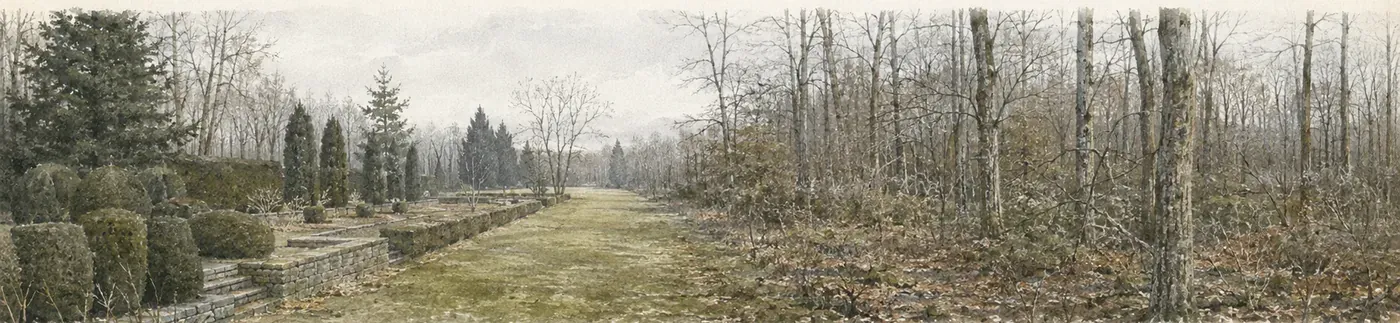
The formal gardens sit closest to the manor: the Italianate or Octagonal garden, the Perennial Border, the Annual Garden. Beyond them the planting loosens into the Lilac Garden, the Azalea Garden, the Hosta and Rhododendron collections, and finally the Wildflower Garden, which is the point at which you stop being able to tell where the garden ends and Ringwood State Park begins.
Give it two hours to do properly, or forty minutes if you are only there for the Vista. The paths near the manor are level and easy; the further collections run onto grass and slope.
The manor
Skylands Manor itself is a 1920s Tudor Revival house and it opens for guided tours on set dates rather than continuously. Tours run somewhere between an hour and ninety minutes and carry a modest admission, with concessions for seniors and children. Because the dates move, check the garden’s own events calendar before you build an afternoon around getting inside.
Taking children, or a dog, or neither
This is a good garden for small children and a poor one for a pushchair past the first few acres: the formal paths near the manor are level, and everything beyond the Lilac Garden runs onto grass and slope. Carry the toddler rather than wheel them, and the whole thing opens up.
Dogs are welcome on a leash in the surrounding park. The botanical garden proper is the part to check before you arrive with one in the car — rules on collections like this differ from the woodland around them, and they are the garden’s to set, not ours to summarize.
There is no cafe. There are benches, there is shade, and the lawn below the manor is the obvious place to eat something you brought. The nearest coffee worth stopping for is back towards the lake.
Making a day of it
The gardens sit inside Ringwood State Park, so the obvious combination is a morning walking the woodland trails and an afternoon in the gardens — or the reverse, if you want the gardens before the parking fills.
The other pairing, if the weather turns, is west rather than north: the gardens are twenty minutes from us and the ironworks are five, so a wet afternoon can still be a museum and a short flat walk through the ruins.
The woodland trails at Ringwood · Long Pond Ironworks, five minutes away
One thing not to plan around: Ringwood Manor, the ironmaster’s mansion at the other end of the park, is closed to the public inside while its exterior is restored. The grounds are open.
Where to find itThe New Jersey Botanical Garden